Industrial IoT
Bring equipment, metrology and material history into a shared context, preserving data origin and timing.
Semiconductors & Industry 5.0
Synthetic dispatch and robot simulation
Study how equipment observations, local inference and virtual robot twins can inform human-reviewed decisions in semiconductor operations.
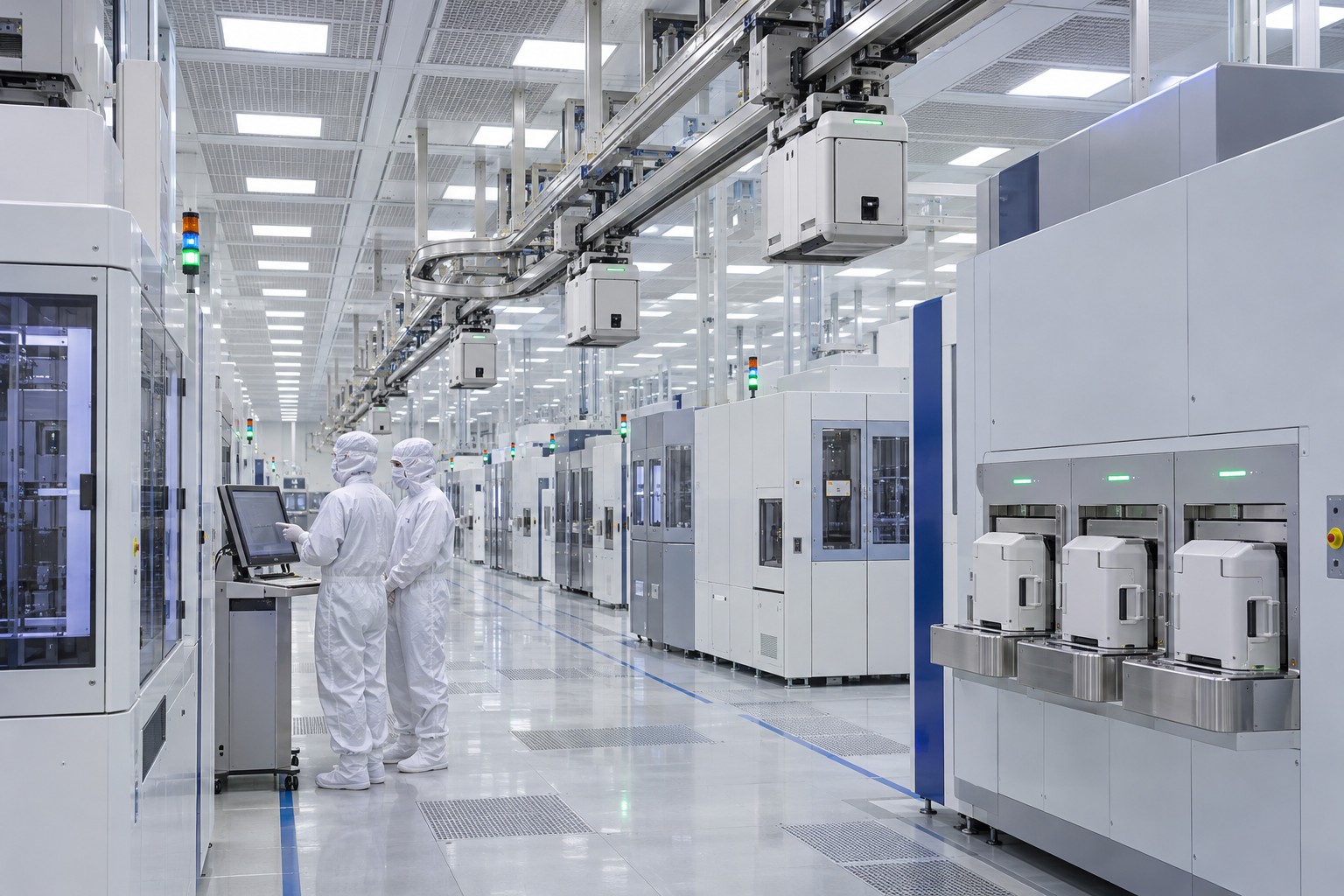
THE OPPORTUNITY
The AI era connects demands on chip performance with complex manufacturing and integration decisions. Precision equipment, skilled people, measurement evidence and material history need a shared operational context.
MANUFACTURING INTELLIGENCE FOR THE AI ERA
Semiconductor manufacturing links repeated processing and metrology with packaging and test. Four complementary research themes connect equipment evidence, physical models and human decisions across that chain.
Bring equipment, metrology and material history into a shared context, preserving data origin and timing.
Study local inference alongside prediction error, data freshness and the operating conditions a model can represent.
Investigate perception and robot task planning for inspection, maintenance and protected material handling.
Study synchronized models of tools and wafer lots to compare actions before committing physical resources.
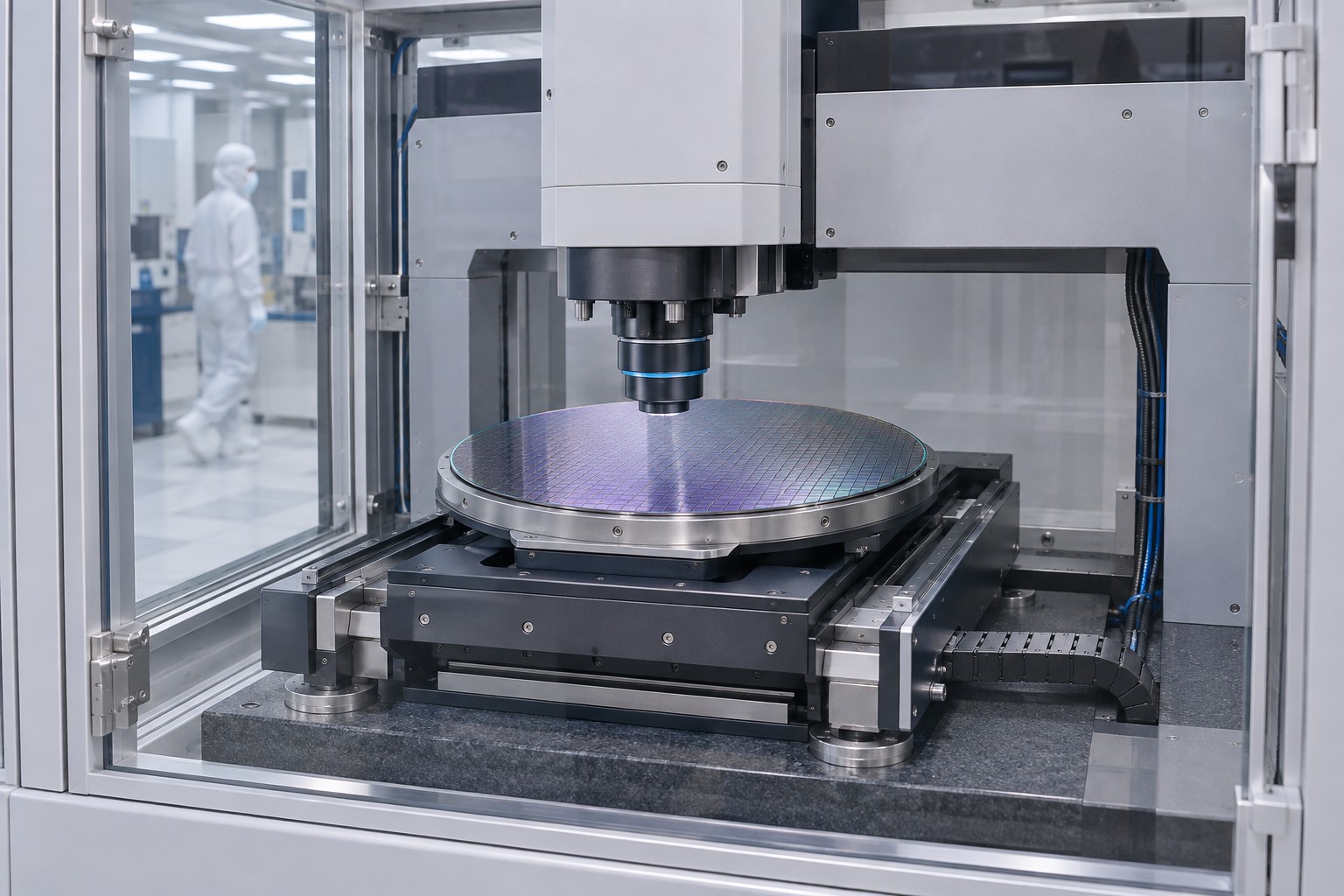
THE DISPATCH STUDY
The browser study connects modeled observations, a locally trained estimator and synchronized tool state to human-reviewed virtual carrier dispatch. A drift indication can trigger a witness measurement, a hold or a qualified alternative route within the stated scenario.
Explore the fab decision studyACROSS WAFER AND PACKAGE
Potential extensions connect chiplet and memory traceability with inspection planning and package thermal or mechanical studies.
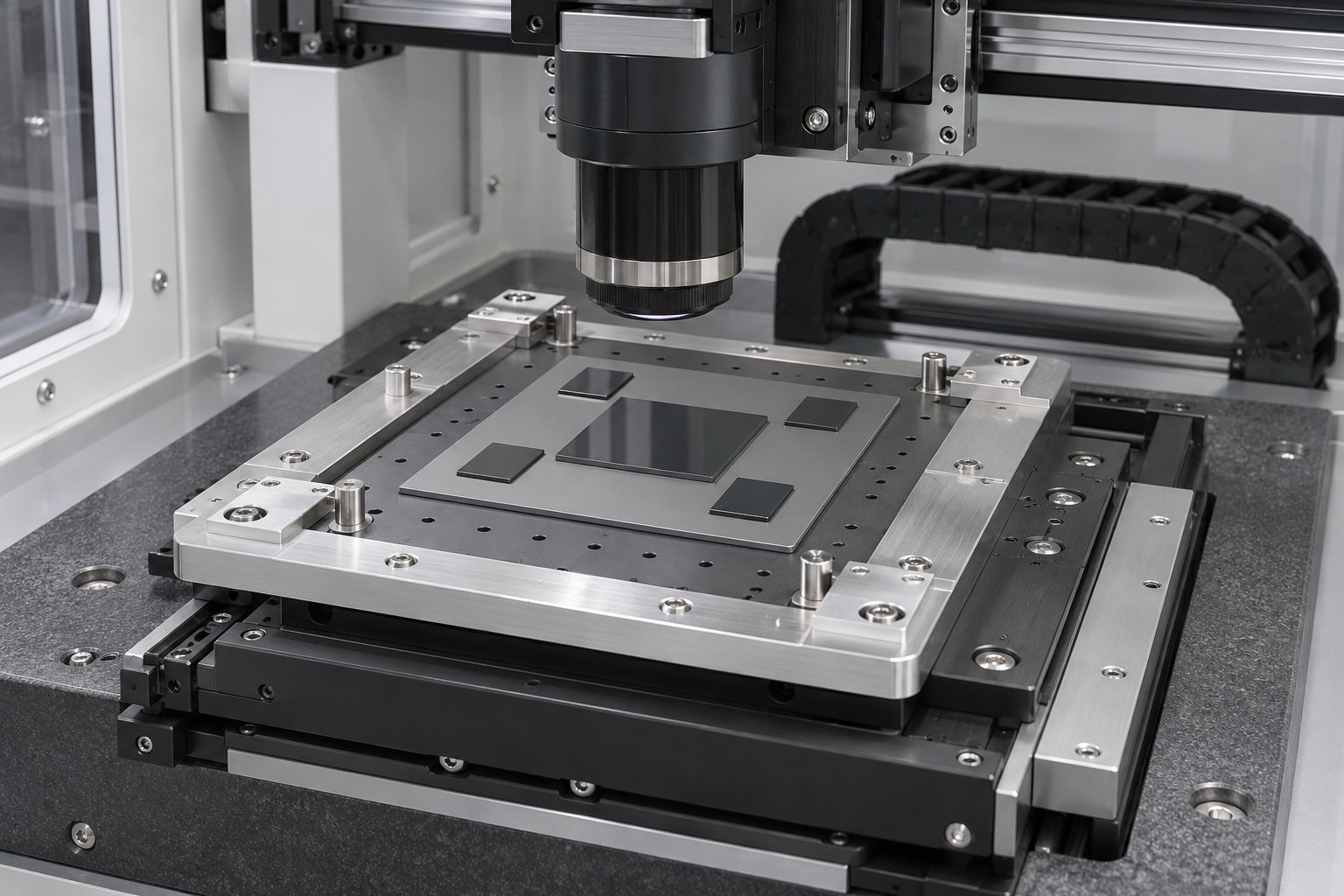
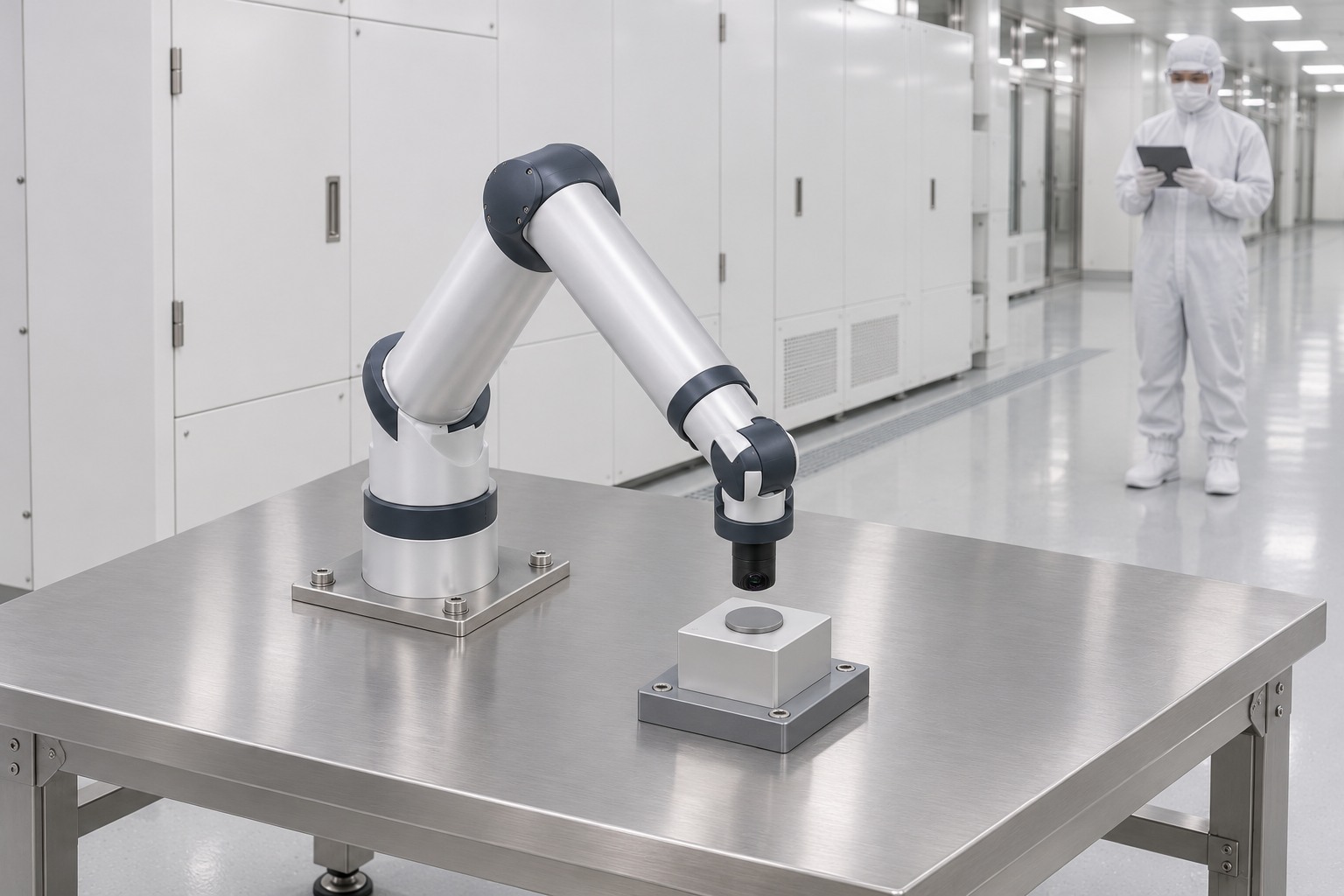
COLLABORATIVE ROBOTICS & DIGITAL TWINS
A six-axis cobot concept frames maintenance inspection away from protected wafer transfer. The preview reconstructs poses from simulated joint data; it is not connected to a physical robot.
FROM INDUSTRY FOUNDATIONS TO FUTURE RESEARCH
INDUSTRY FOUNDATIONS
Traceability, metrology, protected transfer and engineered process control are established foundations. Integration differs across facilities.
CURRENT STUDY QUESTIONS
Evaluate local estimates, data freshness, resource assumptions and human review in defined virtual scenarios.
FUTURE POSSIBILITIES
Investigate learned robot skills, cross-site learning and design-to-package digital threads using application-specific data and qualified operating boundaries.
Physical integration would require calibrated geometry, measured telemetry, equipment qualification and independent validation. The previews do not demonstrate an autonomous fab or a validated collaborative installation.
POTENTIAL APPLICATIONS
Research opportunities to assess for a defined use case.
Explore how tool-level inference, metrology and wafer-lot history can support quality-aware operational decisions in manufacturing workflows for compute-intensive chips.
Investigate traceability, inspection planning and process coordination across logic chiplets, high-bandwidth memory and interposer-based packaging, with reliability and physical constraints in view.
Study qualified alternate routing, engineering review and resource assumptions when a tool drifts, equipment becomes unavailable or a central connection is interrupted.
INTERACTIVE RESEARCH PREVIEW
THE QUESTION TO TEST
Introduce tool drift or delayed observations. Compare qualified routes and inspect the robot twin before reviewing a virtual action.
A semiconductor dispatch study using modeled telemetry, a small locally trained estimator and virtual carrier tasks. It does not run process recipes, predict chip yield or control connected equipment. Learned robot policies remain a research direction.
Explore a related direction.
Multiphysics DesignRESEARCH · DEVELOPMENT · CONSULTING
Outline the use case, available evidence and intended outcome.
Prepare a project brief