Waterfront operations
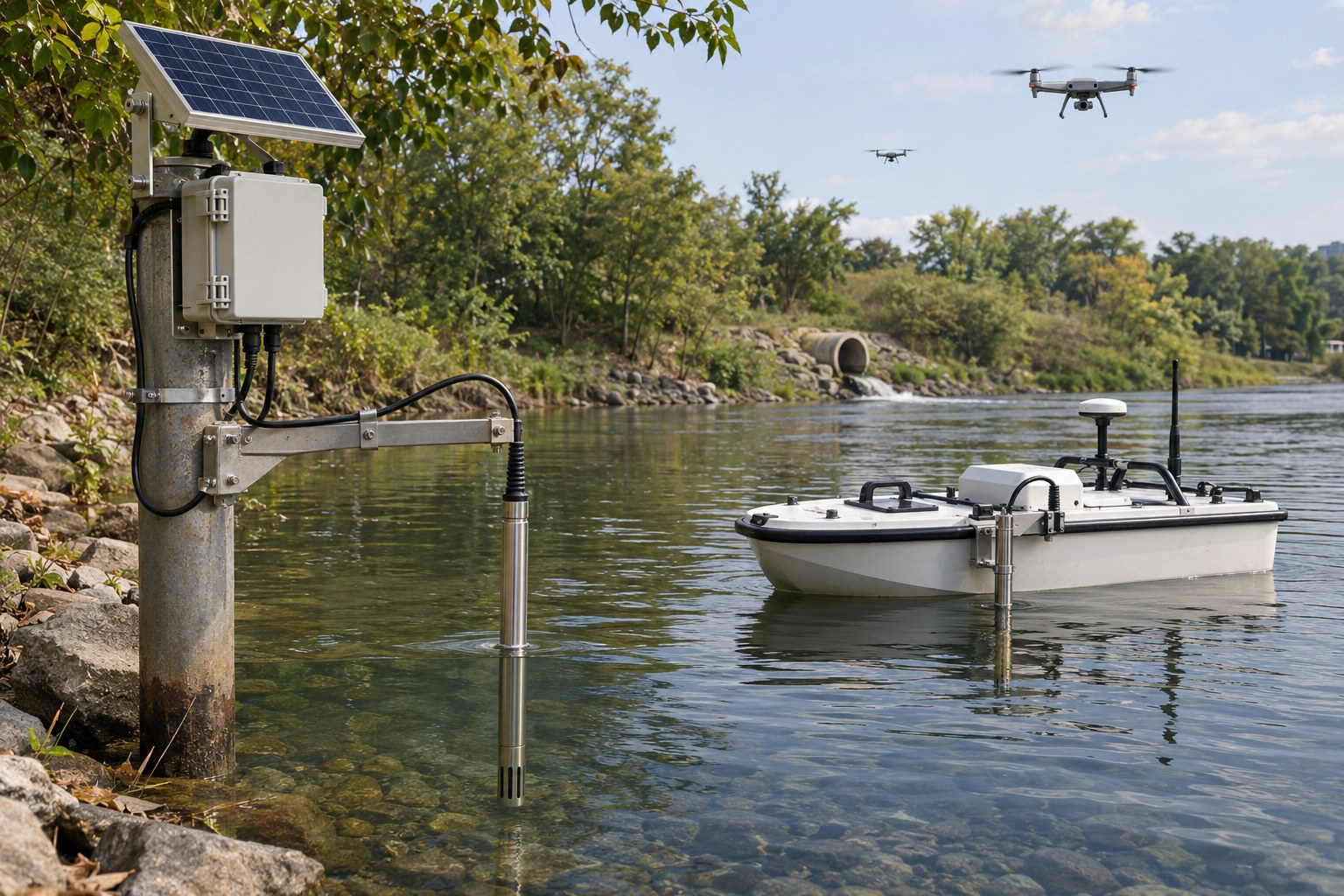
Combine shoreline observations and mobile surveys to help investigate changing conditions around ports, marinas and working waterfronts.
Land–air–water sensing
Synthetic environmental sensing replay
Connect observations across land, air and water to investigate environmental change and plan follow-up measurements.
THE OPPORTUNITY
A single instrument rarely provides the whole picture. Environmental investigation benefits from observations that complement one another across locations, times and sensing platforms.
POTENTIAL APPLICATIONS
Research opportunities to assess for a defined use case.
Combine shoreline observations and mobile surveys to help investigate changing conditions around ports, marinas and working waterfronts.
Explore where additional observations could help distinguish a localized event from broader environmental variation.
Plan complementary routes for habitat observations and close inspection of shoreline assets, selecting instruments and reference measurements appropriate to each survey question.
INTERACTIVE RESEARCH PREVIEW
THE QUESTION TO TEST
Compare land, air and water evidence, then test delayed messages or a conflicting probe reading.
A research replay with modeled observations and a defined map. No live instruments are connected; the preview does not identify contaminants or establish environmental safety.
Explore a related direction.
Physics-Informed AIRESEARCH · DEVELOPMENT · CONSULTING
Outline the use case, available evidence and intended outcome.
Prepare a project brief